Bully Proof Your Child Podcast: Bully vs. Victim: What’s Really Going On
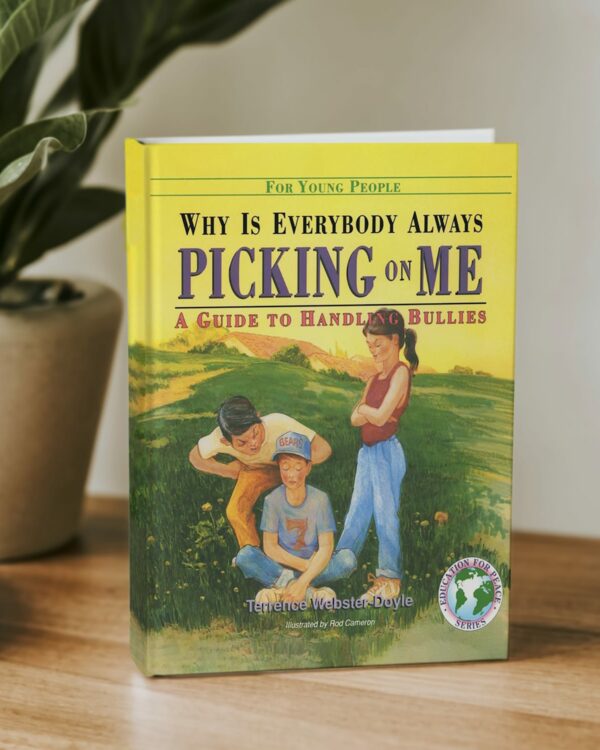
In this episode of Bully Proof Your Child podcast, we’re sharing chapter three from Why Is Everybody Always Picking on Me? by Dr. Terrence Webster-Doyle. This chapter takes a closer look at why bullies and victims exist in the first place.
It explores how the roles we take on, often without realizing it, can shape the way we respond to fear, pressure, and the world around us. From early experiences to the influence of family, school, media, and society, this chapter helps connect the dots between what we go through and how we act.
As you read through, take an opportunity to reflect on the roles you may have taken on yourself, where they came from, and how they might be influencing your behavior today.
Looking for practical advice to help your child deal with bullying? Enroll in our online course and get weekly lessons packed with actionable tips to handle the situation with confidence.
Podcast Transcript
Chapter Three: Why Do Bullies and Victims Exist
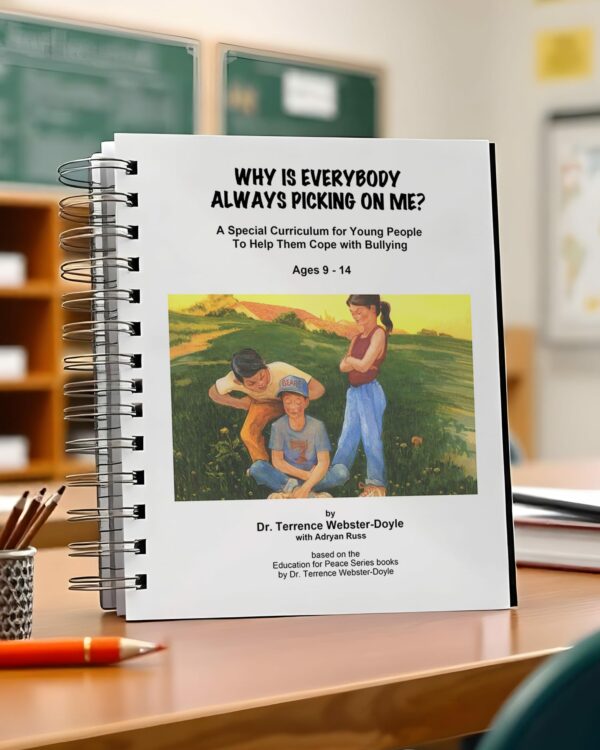
Today, I am reading chapter three from our book, Why Is Everybody Always Picking on Me? A Guide to Handling Bullies. This is written by Dr. Terrence Webster-Doyle, and if you would like to download it, you can find the link in our show notes.
Chapter three is called Why Do Bullies and Victims Exist?
Understanding Roles We Play in Life
As we grow up, we learn to play various roles in life, such as son, daughter, child, student, and team member.
Some of these roles change, and some stay with us. Some of these combine to form a life role and lead us to become the adult we grow into. Examples of roles we might become are teachers, lawyers, doctors, writers, and so on.
These are professional or career roles that we take on in order to earn a living or because they are meaningful to us and we enjoy or have a talent for.
Conscious vs Unconscious Roles
There are other roles we take on because we care for another person or persons. Some of us get married and have children.
We take on the role of husband, wife, mother, or father. These roles that we take on because we want to are called conscious roles, meaning that we are aware of them. We purposely become an athlete, a policewoman, a nurse, a performer.
There are other roles we take on without purposely choosing them. These are called unconscious roles, meaning that we are not aware that we have taken them on.
These roles may come from feeling the need to protect ourselves from whatever we feel we need protection from, usually something that has threatened us in a competitive activity.
How Fear Shapes Behavior and Identity
We create these unconscious roles because we are afraid.
For example, you may have a fear of taking tests, so you develop the role of “someone stupid.” You pretend that you are someone stupid as a response to the fear that you will flunk your tests. You say, “Of course I won’t do well on the test. I’m just so stupid.”
If you succeed in your role, no one will expect you to do well, and you will be safe.
Perhaps you have a fear of playing sports, so you develop the role of “someone weak.” You become someone weak, saying, “I’m not strong, so you better not pick me for your team,” or, “I better not play this game because I could hurt myself.”
Perhaps you have a fear of speaking in front of the class. In order to avoid doing it, you may create a role of “someone shy.” You become this character, someone shy, and say all the things you think someone shy would say.
Fear does this to us.
It has a control over us. It can sometimes turn us into playwrights, writing scripts for ourselves that make us say and do things that we may not really want to say or do.
Our Best-Selling Resources
-

Why is Everybody Always Picking on Me? Curriculum
$100.00 -
Respect: The Act of Being Kind to Myself
$100.00 -
Why Is Everybody Always Picking On Me? Workbook
$50.00 -
Why is Everybody Always Picking on Me? Book
$25.00 -
12 Ways to Act With Respect Curriculum
$100.00 -
12 Ways to Walk Away with Confidence Curriculum
$100.00 -
Rights & Responsibilities for a Bully-Free Society
$75.00 -
Why Can’t I Do What I Want? Curriculum
$75.00 -
Why is Everybody Always Picking on Us? Book
$25.00 -
Why Do We Bully? Curriculum
$100.00 -
The Complete Bully Busting Program
$100.00 -
Why Am I Always Picking on Myself? Curriculum
$100.00
When Fear Turns Into Bullying
If you’re afraid that people will take advantage of you, perhaps you take on the role of bully. As a bully, you control other people, telling them what to do so you don’t have to do anything anyone else wants you to do.
How to Recognize Bullying Behavior
How do you recognize the bullies in your life? Can you tell when you see one?
Bully characteristics include:
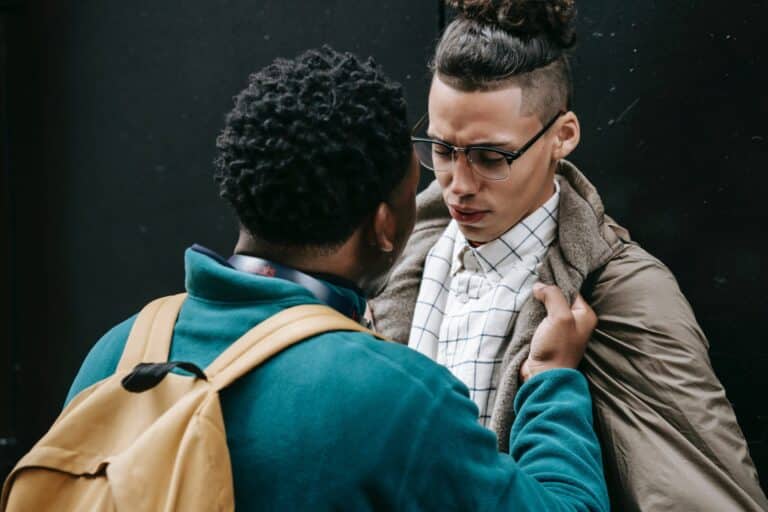
- Facial expressions: Angry, bossy, frowning, hard, mean, cold, and “make my day” scowls.
- Body expressions: These are signals of power or threat. Shaking and/or pounding fists, rude finger displays, hands on hips, arms crossed on the chest, legs spread apart, chest out, chin forward, shoulders hunched, and a swaggering walk.
- Language: Words that are cutting, hurtful, mean, or that frighten, harass, embarrass, or tease, like “punk,” “jerk,” “chicken,” “four eyes,” “shorty,” “nerd,” “dork,” or attitudes that say, “I’m better than you,” or “I deserve more than you.”
- Behavior: Signals of displeasure, violent actions, threats, and throwing their weight around.
And finally, have you ever considered that a victim, the one who’s being picked on, plays a part too?
If you’ve been a victim, think about the role you played and how you communicated with the bully. Do you think there’s anything you did that made you a prime target for a bully to pick on?
You already know that a bully acts like a superior person, one who appears to have control and power over another.
Understanding the Role of the Victim
A victim, on the other hand, acts like an inferior person, one who becomes a servant and does what the superior person wants.
The reason the victim acts this way is because he or she is afraid. The bully and victim take on a leader-follower relationship. They’re both afraid but act out their fears in different ways.
Victim characteristics include:
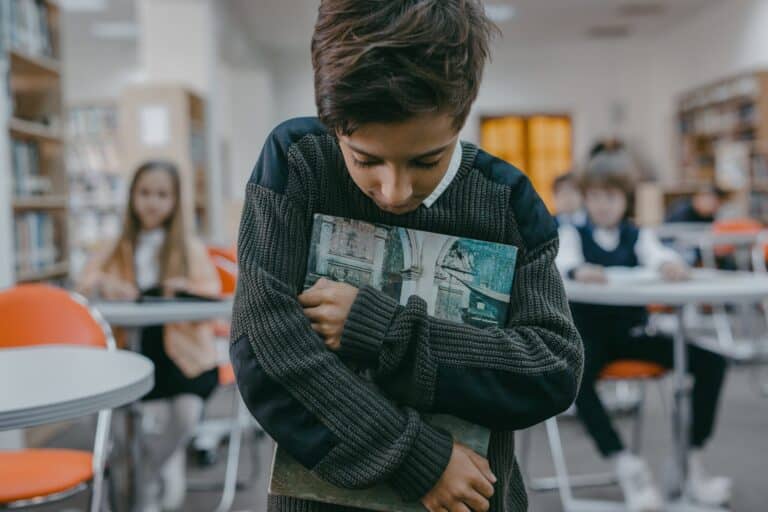
- Facial. Fearful, timid, shy, fragile, weak, sad, or sorrowful.
- Body. Arms are limp by their side, their shoulders are drooped and shaking, head bowed, legs trembling, knees knocking, feet turned inward, looking down at the ground, or crouched.
- Language. Statements like, “I’ll give you anything, just don’t hit me.” “I’ll tell my mother on you.” “I guess I am a nerd.” “Now can I have my hat back?” An attitude that says, “I feel inferior to you. You’re better or stronger than I am.”
- Behavior. Their quiet, shy, overly careful actions, never pulling attention to him or herself.
The Vicious Cycle of Bullying
A kid may not always get the attention he needs at home. In order to get that attention, he may play the role of “poor me.” In this way, he bullies his parents into feeling sorry for him and doing things to make him happy, which gives him a lot of power.
He uses self-pity to manipulate his parents. Using tears and manipulation in this way, this kid, as a victim, turns into a kid as a bully. His parents believe he is weak and needs protection, but actually, he’s not weak at all.
He’s very powerful. He uses his feelings to force his parents into treating him as special or overly sensitive.
This manipulation, however, usually backfires.
Once he takes on the role of special and overly sensitive, he is often singled out by bullies to pick on. This fits into his role as victim, makes the “poor me” all the more real, and makes his parents want to protect him even more. This is what is called a vicious circle.
In order to get power in the household, to dominate and bully his parents into doing what he wants, the kid pretends, plays out a role of weak, hurt, fragile, and sensitive. This not only gets his parents’ attention, which is what he wants, but also gets attention from a bully who picks on the weak and helpless “poor me.” His parents then protect him even more.
Do you see the vicious circle?
Breaking Free from Roles and Labels
If you can see through the roles and games that people play, no one will be able to control you or get you to do things you don’t want to do. You will be able to relate in healthier and more intelligent ways.
There’s no need for people to bully, control, or rule others.
With understanding, human beings can cooperate without control or fear and share equally in this world.
What Influences Bullying Behavior
What makes us start acting out unconscious roles? What influences our thoughts so that we become a character who is not real, an actor with a mask?
A character is defined by their characteristics, physical attributes, and activities. These include how their character looks, walks, talks, what language he or she speaks, and the clothes they wear.
Two are influences. The mental and psychological makeup of the character. This includes how they think, feel, and act.
We’ve already looked at the characteristics of bullies and victims, but what influences them? Where do they learn these characters they play? From TV? Movies? Performers? Comics? Videos? Books? Parents and teachers? Community leaders? National leaders?
The things that influence a person to be a bully are the very same things that influence a person to be a victim.
Media, Role Models, and Learned Behavior
In the movies or on TV, the bully is always portrayed as the bad guy, the one the heroes are trying to bring under control.
The so-called heroes, however, can be just as violent as the bad guys.
Why Bullies Are Often Former Victims
Every bully, at some point in their life, has been a victim. If you have been the subject of abuse, there’s a good chance you will turn around and dish it out.
That’s why some of the heroes we see are violent. They’ve been treated with violence, so they respond with violence.
You could say that a bully is a victim in disguise.
Have you ever noticed that when you come out of a theater, you feel like and identify with one of the characters you’ve just seen?
If a bully is portrayed as a bad guy, the victims may be portrayed as the good guy. If the bully is portrayed as the good guy, the victims can be portrayed as the bad guy.
Sometimes you identify with the bully, and sometimes you identify with the victim.
It’s easy to identify with a bully, like Dirty Harry, when he’s doing away with all the villains.
On the other hand, it’s also easy for us to identify with the victim, like Woody Allen creates in many of his movies, because we laugh at him, we like him, and we want him to get what he wants.
The Impact of Role Models and Imitation
When we attempt to act our roles we think we ought to play, or identify with people we think we ought to be like, we are imitating role models, which are people to admire and be like.
Doing this can cause us to become confused about who we are.
Sometimes it’s difficult in this world to be who we are, mainly because we’ve been shown many role models but haven’t been taught how to be ourselves.
It takes an incredible amount of energy to work at being like someone else when you’re not. Being yourself is the only person you could possibly be and be happy.
Violence in Media and Its Influence
When I grew up, every young man’s hero was John Wayne and his portrayals of the all-American male, a tough, lonesome, unfeeling, hard, violent cowboy and soldier. In his movies, agreements were settled by punching, strangling, knifing, or shooting the enemies.
This was the way I was shown how to resolve conflict. The characters created by John Wayne were my role models.
Today we have very similar heroes. We have a wide range of characters on TV and in the movies who use more and more violence to solve their problems.
Are these characters truly heroes? Do you find these characters exciting? Would you like to act like them? Be like them?
I have seen women in movies punch, strangle, stab, and shoot people they disagree with, just like men do. They are just as capable of intimidation and control through violence.
Who is your female role model?
Talk to your parents and teachers about roles and role models. See if you can discover what makes bullies and victims play the parts they play. Why would a person want to bully you? Why would you want to bully someone?
If you can see that there are times when you have wanted to bully or times when you have actually been a bully, then you know that a bully is not really a bad person.
Understanding Bully Feelings
We all get bully feelings from time to time. We want other people to do what we want them to do, and we are prepared to use force to get them to act according to our wishes. One reason we feel this way is that we have hurt feelings or angry thoughts, perhaps bad feelings about ourselves.
As a result, we try to control someone else, thinking this will ease our pain or protect us from being hurt by that person. We bullies act tough and want to frighten or hurt people who are smaller or think smaller than we do. We think other people are better than we are, so we are constantly trying to prove ourselves.
Sometimes we bullies act tough because we are afraid that other people are going to hurt us. We pretend to be tough so other people won’t bother us.
Sometimes we bullies act tough because we are upset.
Perhaps we have been fighting at home with our parents or brothers and sisters. We are so angry inside that we explode and take it out on other people.
How Environment Shapes Behavior
There are many different circumstances in your world that could lead you to become a bully.
Maybe you’ve never thought about these before. Here are some possible influences.
The Role of Family in Bullying
Your family might be the last thing you think of as being the cause of your being a bully, but your family is at least partially responsible. Here are some ways your family could influence your bullying. Write down any comments you want to make.
Do your parents offer harsh physical or verbal punishment? Allow you to get away with aggressive behavior? Act violently toward you or toward each other? Ridicule or hurt you by teasing you or laughing at you? Talk much with you? Spend time with you outside of mealtime? Take you along anytime, anywhere? Praise or encourage you? Exchange ideas or thoughts about life with you? Set limits on your behavior? No more care where you are after school? Care what kind of friends you have?
The Influence of Friends and Social Groups
That brings us to your friends.
If you have an interest in the martial arts, for instance, chances are you will make friends with others who share that interest. We generally make friends through what we have in common, to a person we are drawn to, or with someone who wants to be friends with us.
In the same way, it’s common for one bully type to become friends with another bully type. Gangs of tough youths get together and support one another in their bullying behavior. We all need to be acknowledged and supported for who we are.
When we are rejected by people we know, we feel frustrated and angry. We feel that the world is against us. We get a “me vs. you” or a “we vs. them” feeling.
How Schools Can Reinforce Bullying
Your school can contribute to creating bullies without being aware of it. School supervisors, like Mrs. Potter in the first story in this book, which you can go back and listen to in a previous episode, show kids how to be bullies.
Instead of appealing to your non-violent nature, some teachers express violence and don’t understand why some kids are violent in return.
It’s important to have rules and regulations that help your school run efficiently. However, if these rules and regulations are overly strict and lacking in understanding, your school may be participating in teaching kids how to be bullies.
The Media’s Role in Normalizing Aggression
All forms of media, television, movies, video games, comics, magazines, and social media, can promote violent bully behavior.
In the movies, for instance, Rambo is portrayed as a hero. G.I. Joe is a hero in comics. Television, of course, has many bully heroes.
When we, as children, see how commonly aggressive behavior is displayed, we learn that it is acceptable and that, in many cases, it is rewarded.
There are two major hazards here.
One is that violent TV programs are so commonplace that we become numb to the bullying and the violence.
And two, kids who watch a lot of violent TV programs learn to see the world as a threatening, hostile place and become afraid.
We learn that we must deaden our feelings and become distrusting and aggressive in order to survive.
Community, Competition, and Pressure
Some competition can inspire us to improve ourselves, but other forms of competition can be harmful to the way we think and feel. Business can create a very competitive environment.
What’s the situation in your community? Do business leaders compete with each other and become violent, or do they network and put their know-how together to create a better community?
Power, Politics, and Control
We have many fine politicians who work to create changes that are healthy for all of us. Others are politicians because they enjoy being powerful, making decisions, telling people what to do and how to do it.
Because we have political parties, there is often opposition and conflict created between them.
Bullying and the Military Mindset
The entire military operation is reliant upon people who give orders and people who take them.
Soldiers are bullied into killing and bullied into believing that they ought to kill for their country. Military leaders of opposing countries play the game of one-upmanship. Which country is better? Who can be stronger? Who can win the war?
We are bullied into believing that we ought to want to be better than our friends, stronger than our neighbors, and that we ought to want to win in a struggle with other human beings.
I believe we have wars because we have been bullied into believing that we should have them.
We’ve already learned that parents, schools, communities, and the media can all contribute to teaching us to be bullies. But there is something else deep inside us that can also be a cause.
The Fight or Flight Response Explained
Have you watched a dog and cat when they meet for the first time? Do you remember what they do?
They freeze. Then, if the cat moves, either the dog chases the cat or the cat stands its ground and fights the dog. This is called the fight or flight response.
The cat either fights the dog or runs away from the dog, or vice versa. Humans have this response too, to protect ourselves from being attacked.
Survival Instincts and Human Behavior
Back in the day of the caveman, humans would frequently be attacked by wild animals.
They would have to fight the animal or run away in order to survive. The creature who would fight the best or run the fastest was the one that survived. This phenomenon is called survival of the fittest.
If you have studied Darwin and the theory of evolution, you know all about this.
As far back as man can remember, living creatures have been afraid of predators and have adapted self-defensive, aggressive ways in order to survive and live.
Do you think it’s possible that today we human creatures try to dominate and control others because we think we still need to in order to survive?
I do.
Do We Still Need to Compete to Survive?
I think mankind learned this behavior long ago and that we’ve been passing it down to each other, generation after generation.
The question to ask, however, is, is this behavior necessary today?
When humans lived in small tribes with little food supply and a scarcity of shelter, fighting to survive may have been necessary. But today, with advancements in science and technology, we have created an abundance of food, shelter, and clothing.
Reflecting on Bullying and Society
Do we still have to fight to survive? Why do humans still believe we need to compete in order to live? Why is one person rich and another poor? Why does one country have so much while others have so little?
Take some time to think about these.
That’s the end of chapter three in our book, Why Is Everybody Always Picking on Me? If you would like to download it, you can do that here.