Bully Proof Your Child Podcast: Can a Bully Be a Friend? Helping Kids Handle Conflict
Bullying can be one of the most challenging experiences for kids and often leaves them feeling powerless and unsure of how to respond. In this first lesson of the 12 Ways to Walk Away with Confidence curriculum, we explore a unique and empowering approach: learning how to make friends with a bully.
While the idea may seem counterintuitive at first, this lesson helps kids understand that bullying behavior often stems from a desire for admiration, respect, or control. By recognizing the humanity behind the behavior, children can begin to respond with empathy and kindness rather than fear or aggression.
Through guided discussions, reflective questions, and engaging activities like “Am I a Bully?”, this lesson encourages kids to see conflict from a new perspective and develop practical strategies they can use in real-life situations.
Whether you’re a teacher, parent, or youth leader, this walkthrough will help you confidently implement Lesson 1 and support children in building the skills they need to navigate bullying and conflict, both now and into adulthood.
Podcast Transcript
Introduction to the 12 Ways to Walk Away with Confidence
We want to walk through the 12 Ways to Walk Away with Confidence, which is one of our curriculums, lesson by lesson.
Our goal in doing this is to help guide you through each lesson and make it easier for you to teach your students. The curriculum gives kids twelve different ways to handle bullying and conflict situations.
These strategies aren’t really a one-size-fits-all. They’re tools that need to be practiced and honed, just like you would English or math. It takes time and repetition to become comfortable using them, and not every situation will work with every single idea. The goal is to learn all twelve approaches and then use them interchangeably, depending on what the moment calls for.
We’re here to break it all down and share stories, make it fun to learn.
Lesson One Overview: Make Friends and a Bully Can Be a Buddy
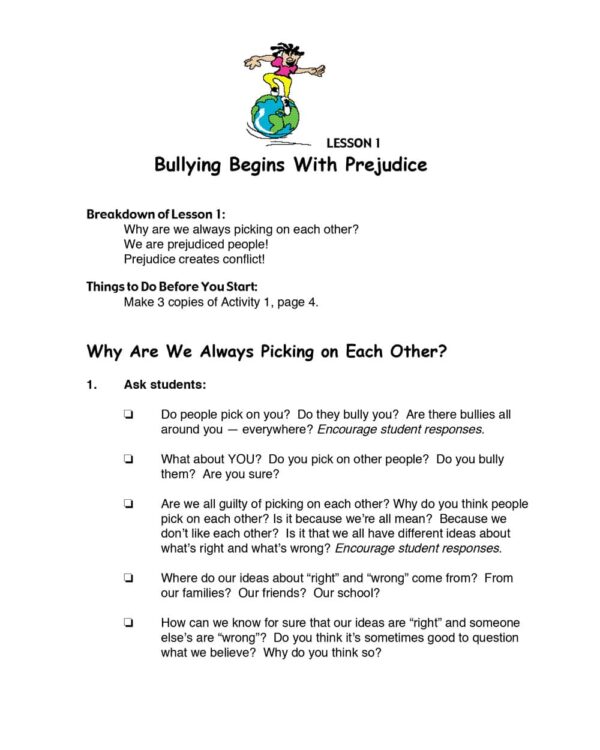
To start off, we’re going to dive into lesson one, which is called Make Friends and a Bully Can Be a Buddy. This lesson focuses on helping kids see conflict differently so they can stay calm and try to turn a bully into an ally, or at least be friendly with them.
Gary, I know you’ve worked with this curriculum for quite a few years. When you first hear, “Make friends with a bully,” what comes to mind? Have you actually seen kids do that?
Oh sure. We’ll be sitting in a circle, and some of them look like they’ve just bitten into a lemon when I say that. Their eyebrows rise, and they want to know what I mean. “What do you mean, make friends with a bully?” That’s often the first reaction.
Our Best-Selling Resources
-

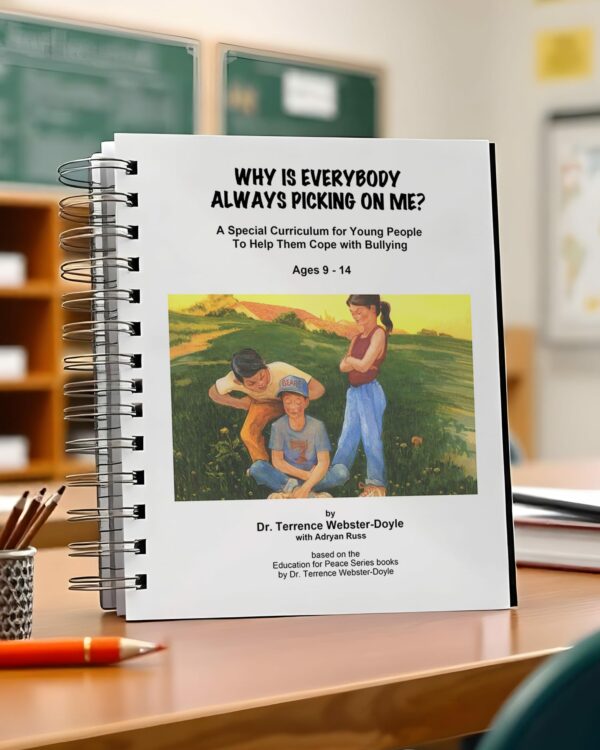
Why is Everybody Always Picking on Me? Curriculum
$100.00 -
Respect: The Act of Being Kind to Myself
$100.00 -
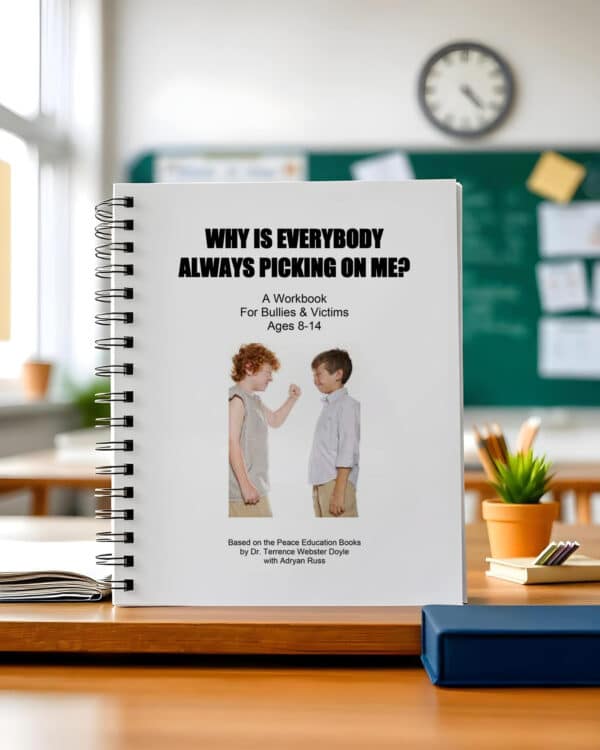
Why Is Everybody Always Picking On Me? Workbook
$50.00 -
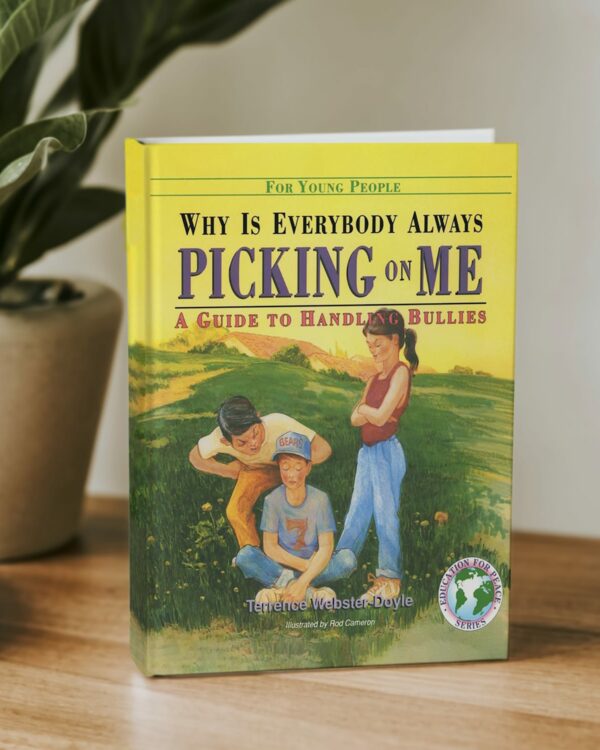
Why is Everybody Always Picking on Me? Book
$25.00 -
12 Ways to Act With Respect Curriculum
$100.00 -
12 Ways to Walk Away with Confidence Curriculum
$100.00 -
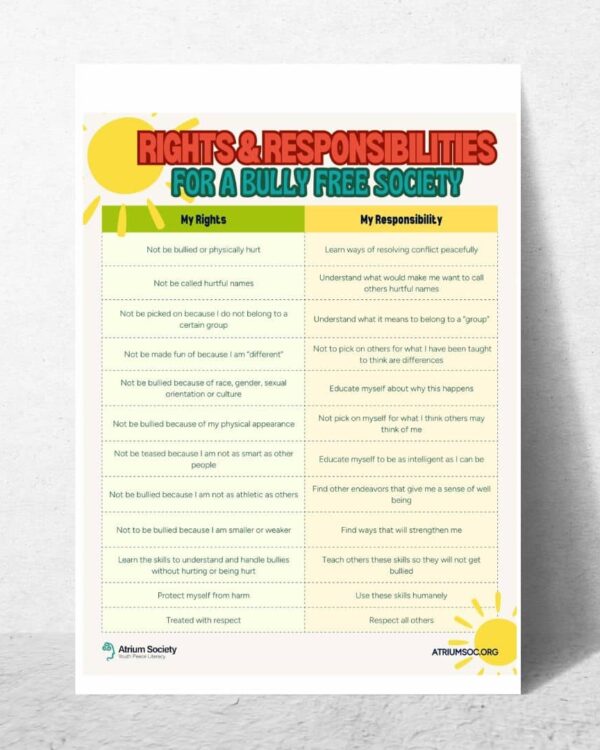
Rights & Responsibilities for a Bully-Free Society
$75.00 -
Why Can’t I Do What I Want? Curriculum
$75.00 -
Why is Everybody Always Picking on Us? Book
$25.00 -
Why Do We Bully? Curriculum
$100.00 -
The Complete Bully Busting Program
$100.00 -
Why Am I Always Picking on Myself? Curriculum
$100.00
Using Reflective Questions to Spark Discussion
Let’s start this lesson the same way we would with the kids, using questions to get them thinking so they can move beyond that initial response. I’m going to read a few questions, and I encourage you to hit pause after each one and think about it before continuing.
The questions are: What is a bully? What’s your reaction when you see a bully? Have you ever been a bully, and why do you think that? Do you think bullies become bullies because someone once bullied them? Do you think that, at one time or another, we’ve all been bullies? Would you ever treat a bully as a friend instead of an enemy?
Now that you’ve had a moment to think through these questions, and hopefully ask your kids some of them, what do you notice from thinking through these? And Gary, how do kids respond to these?
How Kids Define Bullying
Well, it’s funny. When we begin the lesson and ask, “What is a bully?” I’ll get an array of answers: “My sister is a bully,” “A bully is someone who wants to beat you up,” “A bully is a very angry person,” or “A bully says mean things.” So I’ll get the whole spectrum from these kids.
They’re acutely aware of some of the qualities that go into being a bully.
Yeah. So do these questions get them talking about other things that bullies might be?
Well, they start telling their personal stories of how they’ve been affected. That tends to be what they fixate on—what’s happened to them.
Some will chime in and expand the answer, and then it ultimately leads to the next question.
It just keeps the conversation flowing naturally. Once you’ve started to open up these conversations with the kids through these questions, something that’s great to do is to sum up the whole idea with them.
Understanding the Human Need for Admiration and Respect
What I’m about to say, I’m paraphrasing from what Dr. Webster-Doyle has written in the curriculum. If you want the exact language rather than my paraphrasing, make sure you grab the full curriculum. But basically, the idea is that everyone, including bullies, wants admiration and respect.
This is something all humans want. So in thinking through that, what happens if, instead of seeing the bully as the enemy, and knowing they would like admiration and respect, you are able to treat them as a friend, or at least be friendly in that situation?
This might not work in every single bullying situation. For example, if the situation is physical, this might not be the best approach. However, there are many situations where this can be very helpful.
If we think about it, much of the time bullying behavior comes from a desire for control. If we’re able to give that control in a way that doesn’t hurt either person, neither yourself nor the bully, both of you can come out ahead.
Turning a Bully into a Buddy
The idea behind this lesson of turning a bully into a buddy, or simply treating them with friendliness and respect, is that you can stop the bullying with your mind instead of your fists or by getting into a fight. I know that making friends with a bully sounds counterintuitive, which is often how kids feel when they first hear it, but it can be a very effective way to manage bullying in certain situations.
Gary, when you’re teaching this lesson, have you ever heard from kids, maybe after they’ve used it a little bit, how they’re able to change the situation they’re in by being friendly or treating someone with respect?
Yes. I think it comes from empathy. The child being bullied has been taught all the ingredients that go into making someone a bully and all the things that could be going wrong in this person’s life. Because of that, they develop empathy and will go the extra step to try to understand why they’re being bullied on a certain subject.
For instance, you’re in the third or fourth grade and you’re learning math and you’re good at it, but the person next to you isn’t and starts calling you a clown, a jerk, a nerd, and everything else. You can understand why that is, and it’s because that person is having a hard time with the math.
Now, a great way to make friends with the bully is to say, “Hey, I’ll help you. I’ll help you after class. Let’s sit down. I understand this. Let me help you.”
And with this, it’s important to note that when we say “make friends with them,” it doesn’t mean you have to become best friends or spend time together all the time. It’s about being able to see the person behind what’s happening and potentially help them if needed.
Yes, it’s showing civility.
Activity: “Am I a Bully?”
So, the next part of this lesson is an activity, and every single lesson always has some kind of activity, whether it’s a role play or a get-up-and-move physical activity, which is a lot of fun. It’s probably one of my favorite parts of the curriculum.
This activity is called “Am I a Bully?”, and it’s a fun and really quick way to help kids reflect on their own behavior.
So, you would do this activity after you have gone through the questions and a discussion beforehand.
Basically, you want to get everyone in either a circle or just sitting down in front of you. You’ll walk around the room and start saying the first part of an unfinished sentence. Then you’ll stop at a student and let them complete that sentence.
The idea is to move through this quickly and keep the energy light. You don’t need to stay focused on one of the answers for a long time, just the first thing that comes to their mind, and then move on.
Encouraging Honest Reflection Without Shame
So, for some examples, things that you could ask are, “Am I a bully? The last time I got angry with someone, I…”, and then have the child answer that. Another question is, “Am I a bully? People get me really upset sometimes, and when they do, I…”, filling in the blank. Another one is, “I’m going to make friends with a bully today. The way I’m going to do this is…”
This activity helps kids think about how they can respond to different situations. As you go through it, it’s very important to remember not to shame anyone because of their answers. It’s just the first thing coming to their mind. The point of it is simply to notice how they’re feeling and how we all act sometimes.
What’s great about these activities is how honest kids can be.
Recognizing Personal Responsibility and Empathy
Have you ever seen any kind of funny ones come out of this?
Oh, absolutely.
Because they’ll get in the moment and you’ll say, “Well, when I get angry, I…,” and then they might come out with a profanity-laced response that’s not appropriate for the classroom. I’ll jump in, and that can be one of the funniest moments.
The language usually isn’t terrible; sometimes it’s just something like calling someone a “bleephead.”
And I just said, “Oh my goodness. And that’s bullying because she started crying.” He said, “Yes, that is bullying.” I replied, “Yeah, that was an awful thing to do.” He said, “I knew it was awful, but I was mad.”
It’s showing how they can recognize their own actions.
Do you ever find that some of the kids don’t notice their own bullying behavior from these questions?
An awful lot of them. I think they begin to learn what goes into being a bully and how they are sometimes, indeed, a bully. This is often followed up by asking, “Okay, when you get bullied, how do you feel? How does that make you feel?” And then, “What you’ve just done to this other person, how do you think that makes them feel?”
This deepens their understanding of what a bully is, how human it is, and how we all can be bullies at times.
Exactly. It’s not just putting it onto another person; it’s showing that everyone can act this way sometimes.
And it’s important to be able to recognize that. Then, next time, you can work on being better and changing your behavior, which is really what all of this is about.
Key Takeaways from Lesson One
So the key takeaway from this first lesson is that when kids are able to recognize that they themselves could have, or have been, a bully, they really start to understand how bullies think. And instead of reacting from fear or aggression when they’re being bullied themselves, they can begin to learn how to respond with confidence and kindness, treat the bully as a person, and see what’s happening underneath.
Next time, we’re going to go through lesson two, which builds upon this by teaching kids how to use humor to diffuse a bullying situation.
Applying the 12 Ways in Real-Life Situations
Again, just to recap, there are twelve of these different lessons, so this will take a little while to go through. Each of these lessons might not be a good strategy in every single bullying situation.
This is why it’s important to practice them. When kids find themselves in bullying situations, they can try out these different approaches to discover what works best for them. The idea is for them to understand the twelve ways and be able to move seamlessly through those that apply to their situation.
Exactly. And the great thing about all of these is that they can be carried into adulthood. Even adults can use them, perhaps not in the same simplistic ways that kids might, but they apply whether you’re a child or an adult.
You can use these different twelve ways to respond to whatever situations you find yourself in. I still use them in my business.
Final Thoughts: Humanizing the Bully
So if you are excited about these different lessons that we’re going to go through, I highly recommend either grabbing the 12 Ways downloadable curriculum that you can print out and use, or continuing to tune in to hear the lessons as we move forward.
And finally, Gary, I know you’ve guided a lot of kids through this program. What do you think is the most important takeaway from lesson one?
I think it humanizes the bully. I think that’s the most important. They’re not this monster created by some demon. They are you. They are you when you’ve experienced a bad situation, when you’re in a really bad mood, when you’re feeling hurt, or when you’re feeling left alone. They could easily be you.
I think that’s the takeaway—that bullies are human, and I also can be a bully.
So thank you for joining us today. Remember that conflict is unfortunately part of life, and that bullying really is one of the most urgent issues that kids are facing today. This is very important education that we all can learn to help kids.