Bully Proof Your Child Podcast: How Peer Mentorship Builds Safer & Stronger School Communities
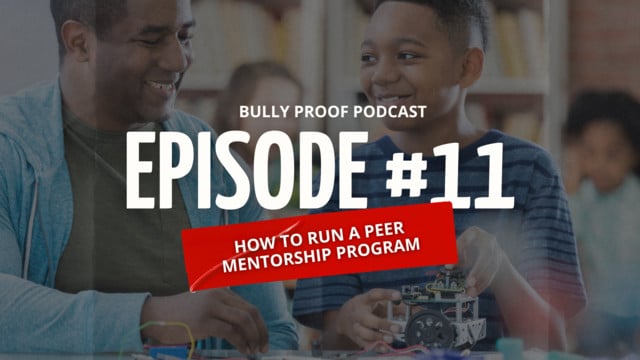
Creating a safe and supportive school environment starts with connection. One of the most effective ways to reduce bullying and build a strong sense of community is through peer mentorship. When older students step in to support younger ones, schools often see stronger friendships, increased confidence, and fewer conflicts.
In this conversation, we explore how mentorship programs can be introduced in both formal and informal settings, the role of empathy and leadership in preventing bullying, and practical steps for getting started.
Whether you’re an educator, counselor, or community leader, you’ll discover simple ways to implement a mentorship program and how resources like MAP STARS can help you create lasting, positive change.
Podcast Transcript
Creating a Safer and More Connected School Environment through Peer Mentorship and Bullying Prevention
Today, we’re going to talk about peer mentorship and its role in preventing bullying.
If you’re here, chances are you’re looking for ways to create a safer and more connected school environment. We wanted to share a couple of ways you can do that by bringing in peer mentorship. We find that when students are able to step in and support each other, you start seeing stronger friendships, fewer conflicts, and a school community where kids feel like they actually belong.
The Impact of Older Students Mentoring Younger Ones
Gary, what have you seen when older kids are able to step in and help the younger ones?
I’ve actually seen them step up. In our child care center, we group them by age—there are the five- to seven-year-olds, the eight- to ten-year-olds, and the three- and four-year-olds. Occasionally, we’ll do a field trip where it benefits us to have an older child come along.
Unexpected Students Becoming Great Mentors
And so it’s really funny. Some of the more flippant kids make unbelievable mentors. It’s sort of counterintuitive, but they seem to step up to the moment. They’re kind and gentle with the younger kids, they accept the responsibility, and they’re very proud after it’s over.
It’s kind of interesting how kids you wouldn’t necessarily expect to make great mentors actually do. That’s really cool to see.
I was completely surprised.
Mentorship Beyond Academics
I think also something to note is that there’s a lot more to mentorship than just tutoring or helping with homework. We often think of those very specific, school-led activities, but it’s much bigger than that.
We’ve seen through MAP STARS that peer mentorship works well when older kids are brought into a program and can support younger kids through it.
It’s a simple way to be doing it, but it’s quite powerful. By giving kids those programs to follow, it helps the younger ones talk with the older ones, connect with each other, and work through difficult topics. It also helps build trust in others and in themselves, which is pretty cool.
Defining Student and Peer Mentorship
Maybe what we should do now is break down what we actually mean when we’re talking about student mentorship and peer mentorship, just so that we’re all working with the same common language, which is very important when discussing these concepts.
At its core, when we say this, a mentorship program is where older or more experienced students are paired with younger ones. They are usually able to offer guidance and support, along with a different perspective that younger kids might not typically have access to.
Our Best-Selling Resources
-

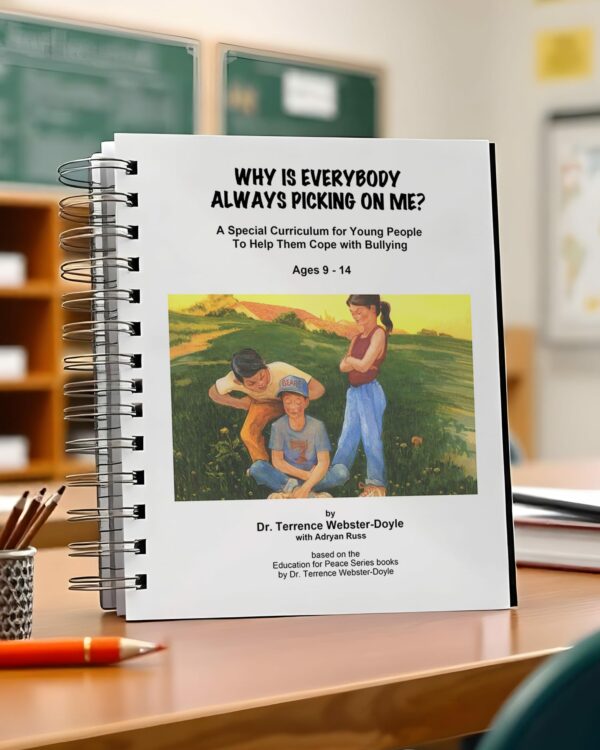
Why is Everybody Always Picking on Me? Curriculum
Available from $0 -
Respect: The Act of Being Kind to Myself
Available from $0 -
Why Is Everybody Always Picking On Me? Workbook
Available from $0 -
Why is Everybody Always Picking on Me? Book
Available from $0 -
12 Ways to Act With Respect Curriculum
Available from $0 -
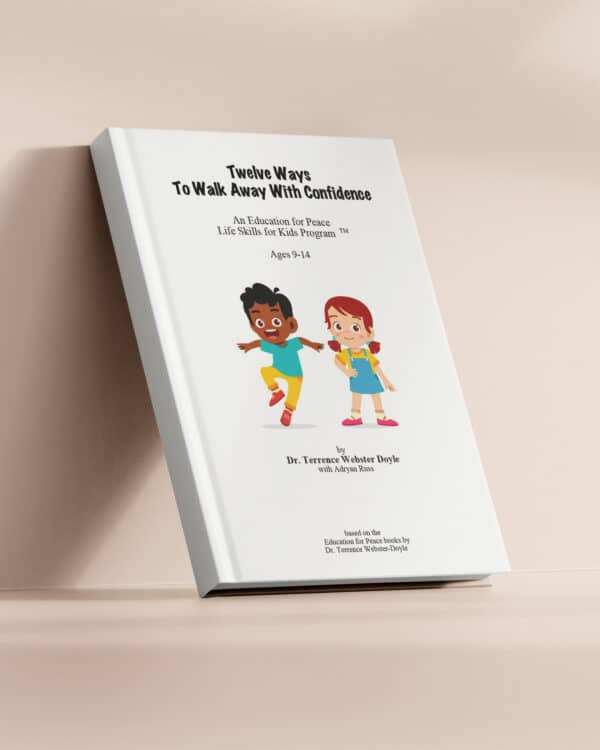
12 Ways to Walk Away with Confidence Curriculum
Available from $0 -
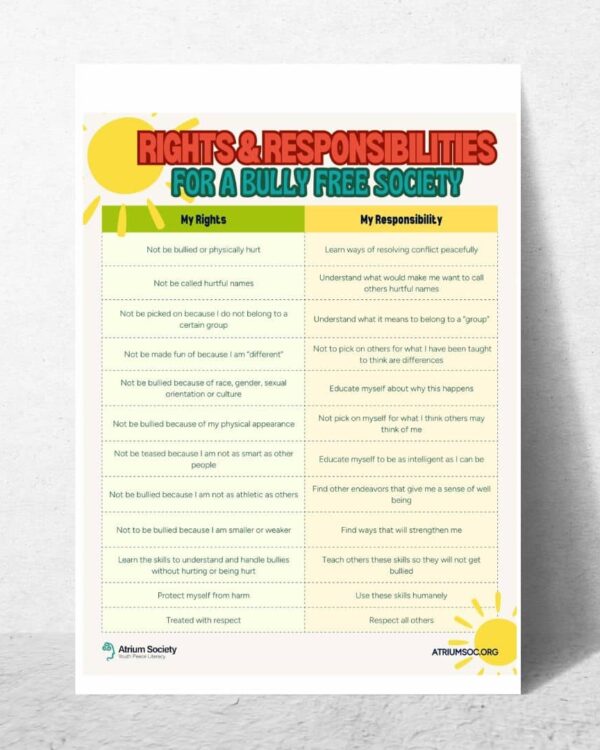
Rights & Responsibilities for a Bully-Free Society
Available from $0 -
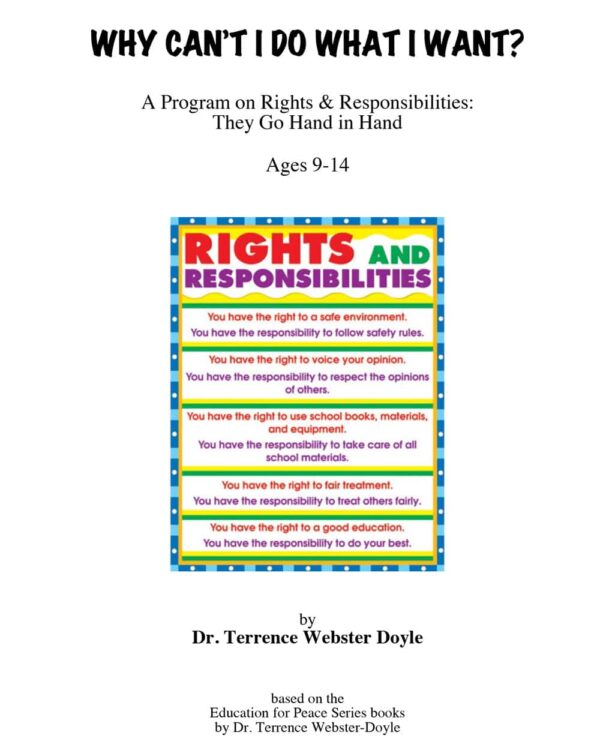
Why Can’t I Do What I Want? Curriculum
Available from $0 -
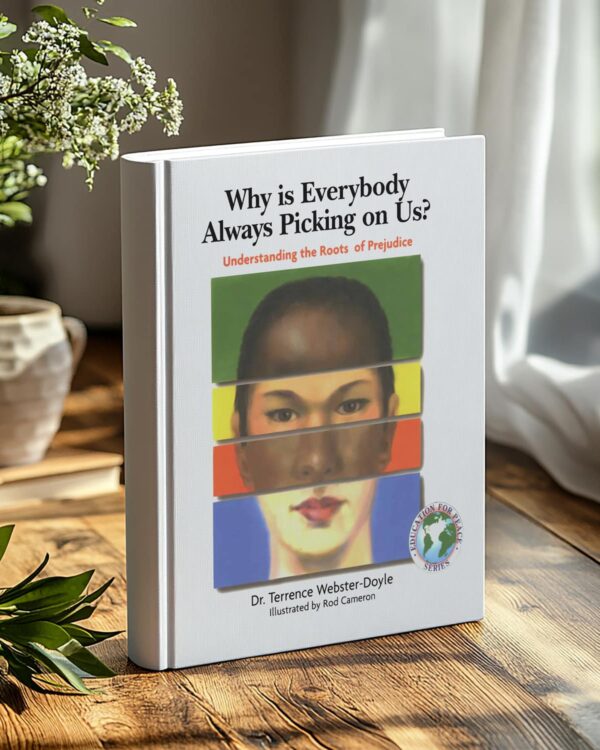
Why is Everybody Always Picking on Us? Book
Available from $0 -
Why Do We Bully? Curriculum
Available from $0 -
The Complete Bully Busting Program
Available from $0 -
Why Am I Always Picking on Myself? Curriculum
Available from $0
Building Trust and Connection Through Mentorship
And it’s not about being perfect. It’s not about expecting the older kids to have all the answers, but it’s about helping them show up for each other.
The goal with this is to help build trust and connection. When younger kids know that they have someone who is a little bit older and a little bit farther along, they feel supported by someone who has their back, understands them, and is able to talk with them.
You’re able to change your school so that it feels safer and more supported for everyone.
Formal vs. Casual Mentorship Programs
Have you ever tried very formal mentorship programs or more casual ones?
Well, I think in our environment, the formal mentorships are the teachers who demonstrate courtesy and respect. Among the children, it’s more casual, but they do take it seriously.
Welcoming New Students Through Mentorship
So, when we have a new student come in, especially for our summer program when they’re there all day, I’ll pick out a child to mentor them in what we do. That means introducing him or her to everyone in the group, explaining all the different activities of the day, and just keeping an eye on them to make sure that they’re comfortable. This helps get them up to speed with our norms and what goes on every day.
And the child I ask will vary, but invariably, they all step up. That’s a great way to get new kids up to speed.
When a child comes into a new program, especially if they’re introverted, it can be very painful for them. You’re placing them in an environment where they aren’t comfortable. My goal is to make them comfortable by introducing them to their mentor for the day.
And sometimes it lasts two or three or four days. A lot of times, a friendship blooms out of that because the person who was being helped is very grateful.
I know when I was a child, that would have stopped me from joining many things, especially if it was partway through or with older, more experienced people. I was very much that shy and introverted child who wanted to feel like I knew what I was doing all the time. If I didn’t, then I just didn’t want to do things. So having a program like that would have been extremely helpful.
Yes. And within that, it’s not just the younger kids who benefit from it; the older ones gain so much from the experience as well. They can practice their leadership skills and empathy without being thrown into a super grown-up role.
So it’s cool that they’re able to help the younger kids in a meaningful way that makes them feel proud as well.
Do you find that the mentors—how do their abilities change? Do they grow more confident or anything like that while doing that?
Yeah, great question. I see a growth in confidence.
And it’s because I, as the teacher—so I’ll speak about my martial arts class—have a new student come in who doesn’t know anything about what it is that we’re doing. I then ask a more seasoned student to mentor them. Usually, they’re older, though not always; sometimes they’re the same age but more experienced.
I think, first of all, they feel flattered or honored that I would ask them to mentor.
Leadership and Confidence Development in Mentors
And then you watch them in the coming weeks, and you can see that they become more confident. They volunteer for more things. Some of them will lead the class in some of our exercises and feel good about it.
So I think we’re building leadership too by giving kids confidence.
Absolutely. When they’re leading the class, is that something that they would have done prior to being a mentor, or does that kind of just happen?
No way. No. And I’ve got a couple of students in mind—they were really introverted and shy. They never looked you directly in the eye or spoke in a loud, confident voice.
And after doing this a few times, they were strutting around like a rooster. It was great.
Yeah, that’s amazing. It really is the simple things and the code that we all try to live up to; being kind, gentle, and respectful. When you put that into action, it really works.
When you’re choosing mentors, are you selecting a wide range of students with different abilities and confidence levels?
Well, many times I base it on who volunteers in class when I ask questions, who raises their hands, because that gives me an indication that they’re not too bashful to take on the role. What I try to do is expose as many kids to leadership opportunities like this as I possibly can. However, it’s important that it feels like their idea and that they show the confidence needed to do it.
Yeah, absolutely. You’re not forcing them into something that’s going to make them super uncomfortable.
Do you find that any students who may have been bullied in the past are able to be very helpful or offer more guidance than perhaps students who haven’t?
Yeah, I do see that. I will tell you it takes longer, because first of all, we have to give them the skills through MAP STARS on how to deal with bullies. Then we have to build a little inner confidence and help break that fight-or-flight instinct that everyone has.
But ultimately, yes. I mean, I had a girl who started with me in second grade.
I was running an after-school program where we were doing martial arts and teaching the 12 Ways to Walk Away with Confidence by Dr. Terrence Webster-Doyle. When she first started, she wouldn’t even look me in the eye.
She stayed with us through the martial arts program all the way to earning her second-degree black belt. That little bashful girl is now a physical trainer for a college football team down in Florida and has a pretty big job as well.
So, yeah, all through coming up through the ranks, she led the class. As soon as she gained a little rank to her belt—around the green and brown belt levels, which are about two-thirds of the way to a black belt—the more she was recognized for her ability in martial arts and MAP STARS, the more confident she became.
That little girl who wouldn’t look me in the eye became very formidable. By the time she left, she was able to express her ideas clearly and confidently.
So she learned how to—I mean, I don’t know if she was being bullied—but she learned how to deal with that and also how to build her confidence and become a leader through all of it. That definitely helped her, likely preventing her from being bullied and enabling her to handle it effectively if she encountered it later.
Humanizing the Bully and Breaking the Cycle
I guess the big question in this is, does mentorship prevent bullying?
Hard to say. I mean, mentorship, if it’s done properly, teaches children to engage directly with others. You’re teaching them to be kind, courteous, orderly, and to have a sense of responsibility.
So I think that leads into not wanting to bully. However, if they’re bullied, they’re also learning the tools to effectively defuse it with MAP STARS.
And having role models is such a big component of helping kids work through bullying. If younger kids are able to work with older ones, they can see what leadership looks like in a kind and respectful manner, especially if they’re not seeing that elsewhere.
If they may be seeing people in positions of power who are not treating them well, having a mentor who does treat them well can be instrumental. It helps them realize that leadership can be a way to support each other and grow. And it doesn’t have to be a negative thing.
Reducing Isolation and Building Community
Another great part of mentorship is that it helps reduce isolation for both the younger kids and the older kids.
Bullying can often happen when kids are feeling alone, either because they’re being left out or they don’t feel like they can talk to anyone about what’s going on. They can feel very much by themselves. But if they’re able to have a mentor they can talk to—someone they meet with regularly or simply know they can go to—they can feel more connected and not as alone.
Mentorship is basically a built-in support system in this way, and it can make the difference between kids speaking up or staying quiet and allowing the bullying to continue.
Have you ever noticed that having people to talk to helps kids through bullying?
Absolutely. I think, well, I’ll go back to the day-one mentor.
A lot of these kids develop friendships with the person who shows them the ropes, introduces them to others, and helps them get comfortable. That friendship becomes strengthened and meaningful, and it can go either way.
After the new child learns the ropes and grows, they can become the mentor, and the person who was originally mentoring can become the mentee. I’ve absolutely seen that.
Learning Together Across Age Groups
The great thing about these relationships is that they don’t have to go just one way. Even though one student is older, they can learn so much from the younger kids as well. Especially if it’s around a craft or an activity, because then the age barriers fall. You either know how to do it or you don’t.
Yeah. And it’s fun to help each other and learn by doing those things. Learning new things together is always a lot of fun and strengthens relationships.
In our class, we learned what to do if you get pushed down. You learn to roll rather than fall. So there was an older child who was having trouble with the mechanics of rolling—getting his arm down, his shoulder down, and his head tucked so he could easily roll.
Well, I think he was about 12. An eight-year-old in our class came up and demonstrated it for him in slow motion, and he picked it up right away.
And so this 12-year-old had an affection for the eight-year-old for as long as he was in our program. He was thankful and appreciative, and the eight-year-old wasn’t showing off. The eight-year-old was trying to help him.
There’s a big difference in how it’s approached in that situation. It could have been very easy for the eight-year-old to come in very showy and say, “Why don’t you know how to do this?” But the fact that they came in with a very helpful manner shows how that relationship changed and how it could have been very different.
Yeah. And the whole structure of learning is that we’re all learning.
Creating a Culture of Respect and Shared Learning
We’re all learning, and we’re at different levels, so we need to share. If there’s one thing you could take from all of this, it’s that: learn from each other. Everyone has something to share. And if you follow the 12 Ways and how to live with respect, dealing with bullying almost comes naturally.
Absolutely. And when you’re using those 12 Ways and building community through these different activities, bullying is going to happen less when everyone feels connected and supported. There will be many people who come to the aid of the person being bullied because it’s not an accepted norm.
If someone starts bullying, you may have four or five kids saying, “Hey, cut that out. We don’t do that here.” You’re all standing up for each other and being there for each other instead of just having one child on their own.
Exactly. And that would work really well in a school system.
How to Start a Mentorship Program in Schools
If you’re thinking that this all sounds wonderful, but how do you actually bring this into your school? We have a lot of ideas on how you can do that.
Before we get into it, just remember that a mentorship program does not have to be difficult. It can be very straightforward and very simple. Just start with the basics, even like what Gary was talking about earlier with that day-one mentorship, and then build it up from there based on how you want it to look.
An important part of this is to think about what your goals are with having a mentorship program.
Do you want these mentors to be helping with academics only? Do you want to focus on social-emotional support, or center the program around bully prevention and creating a safer school? There are lots of ways you can approach this. You can include all of these elements, but it’s often easier and more straightforward to start with one clear goal and then build from there.
If you were to start a program like this in a school, Gary, where would you start?
Well, I’d probably start in the classroom.
I mean, I look at our daycare center as a classroom, or three or four classrooms, and I think I’d bring it in through the teacher. I’d have the teacher learn the curricula and then start mentoring children about it until it gets going.
You can start at building block A: What is a bully? What is it? You can spend a week on that, and every child will have a different idea of what it is, and they’re all right. From there, you can move on to questions like, “How does bullying make you feel?” Again, you can spend another week exploring that. Then you might ask, “Who’s been a bully?” Almost everybody who has been bullied has also been a bully at some point.
I think you can start with these basic building blocks, and a teacher needs to lead it in the beginning—or a guidance counselor or camp counselor—to get it established. As the program develops, they can then identify other mentors to help it grow and function effectively.
What are your thoughts on having the teacher work with some older students in this program and then having those older students work with younger ones?
Oh, that’s perfect, yes. But you have to learn the material first, and once you do, I think it’s great.
Yeah, it’s simple to learn—that’s the great thing. It’s all about those discussions, and kids love to talk to each other. If you can have the older students learning this so they understand it more deeply, it helps them as well. Then they can pass it on to the younger kids. The teachers can also be there to help reinforce the ideas if needed.
Yeah, and like the overnight summer camps, you know, you go away to the lake, and every cabin has a counselor who’s normally a senior in high school or going on to college. That’s a perfect arrangement to get this material out.
That’s a different way of setting it up than just being in a regular school where you have different grades working with each other. In a summer camp situation, the kids are very much looking up to that counselor.
I remember my days going to camp. I thought my camp counselor was unbelievable, and he’d spend just 10 minutes a day talking to me, that’s all. I felt special, looked up to him, and listened to what he was saying.
I had a similar situation when I was in elementary school. I must have been in grade two or three. I was quite young, and then the grade sevens came. I think we just read books together, but it always felt very special.
And then you see those older students you were working with and go, “Oh, hi.” It really helped bridge that gap in age differences.
Yeah, and you felt more like a community.
Exactly. You’re not just separated by your classes, thinking you can only talk to the one grade above you. It opens up the whole school so everyone feels more comfortable with each other.
Even in high school, we had something similar. At the beginning of the year, when we were in grade eight, the grade twelves were involved. We would all go to what was essentially a summer camp for a couple of days—I can’t remember exactly how long, but it was a few days. The grade twelves acted as the camp counselors, and we would do plays, zip lining, and all the typical camp activities. Everyone became so close that by the time we returned to school, people were always talking to each other.
Yeah, oh yeah, it happens. And the twelfth graders stepped up and took it seriously, and that’s what it’s all about.
It is. We’re here to help each other.
It was cool seeing it from both sides, too, because I was introduced to it as a grade eight and enjoyed having the older kids to work with. Then, as a grade twelve, it was fun to welcome the new grade eights to the school and get to know them.
Anyways, we got a little bit of a tangent there.
If you’re going back to actually choosing the mentors in the schools, I would recommend not only selecting the outspoken or the really academically strong kids. Choose some others as well, maybe ones who are quieter or those who have been bullied themselves and have perhaps overcome that or have a different perspective they can bring to the other kids. They may not be used to being chosen to begin with, and this opportunity can be especially meaningful for them.
They might feel really proud to have been chosen in that moment to be seen as a mentor for the younger kids.
Choosing and Pairing Mentors and Mentees
All right, so once you have your mentors, you then need to pair them with some mentees, and that can be based on lots of different factors.
So it can be things like shared interests or personalities, or maybe you know someone could use a certain type of support and you can pair them that way. That pairing does not have to be a forever thing. If you find that some pairings don’t work, you can give them an option to change it, because not everyone meshes. It’s important that they feel they have the flexibility to switch things up until they find a pairing that works well for both the mentor and the mentee.
You can also do pairings that are group-based. It doesn’t necessarily have to be one-on-one like we’ve been discussing with the camp situation. Obviously, that’s not one-on-one, it’s one or two older children working with several younger ones.
So just mix and match that to what you find works best for your school, and you can test that out and see how it’s going.
After that, which we’ve already alluded to a bit, is training. You need to make sure that the older kids are being put into that role with confidence.
Training Mentors with MAP STARS
Don’t just throw them into it and expect that they’re going to know how to do it.
That’s where you can bring in MAP STARS and give them training on how to work with the younger kids and offer that strong support system. MAP STARS has lots of lessons, examples, and discussion prompts, which are super helpful because you can give those to the mentors, and they can then bring them to the mentees.
And they’re very easy to use, so a teacher can go over them with the mentors first, and then the mentors can lead the discussions themselves. That training gives the mentors much more confidence in what they’re talking about.
What’s your experience with training mentors, Gary?
Well, first of all, they have to want to do it.
Second of all, I think you have to determine that it’s not too much for them. A painfully introverted child needs to be cultivated before you ask them to take on that role, because it can be overwhelming. At the same time, an extrovert isn’t necessarily the best choice either, because they often don’t listen. So it really depends on the individual.
I look at it as whether someone wants to do it and if they have the confidence to take on the role. It’s not a hundred percent, but that’s how I usually approach it. And I like to be inclusive.
So the painfully introverted child who is starting to develop confidence, I want to boost them and make that child a mentor to someone for something. Just keep it small, like that day-one introduction.
That’s a fairly small step to help kids become more confident in supporting others.
Our first day of summer camp is coming up in a week. So we have a blend of kids who are transitioning from our after-school program into summer, along with a whole new group of kids coming in. We’ll be having circles where everyone goes around and says their name, their interests, and their favorite things. We’ll do a little bit of that every day for about a week so that everyone starts to get to know each other and build comfort.
A lot of times, especially with our established groups, I’ll ask them to say something nice about another person. I’ll send them home with slips of names because I don’t want it to be off the top of their head, I want it to be thoughtful. I think it works because it’s a genuine compliment.
And the person receiving it feels that, and the person giving it means that.
Yeah. You’re actually giving them time to think about it and come up with something meaningful as a child.
And quite honestly, if I were told to just give someone a compliment right off the bat, it would be like, “Well, I don’t know,” followed by a little bit of panic and then just saying something quickly. It’s not necessarily very meaningful.
And that’s the whole meaning. That begins to build the structure or the foundation of respect. You have to have respect before you go on and learn how to defuse situations.
Absolutely. What you’re also teaching there is that it’s good to take time and think about what you’re going to say and how you’re going to act. You don’t have to respond immediately.
I mean, some situations you do, but not all situations require an immediate answer, which is a good lesson to learn, because I think oftentimes we think they do.
If you want to start more of a formal mentorship program, it would also be good to set some clear expectations on what that looks like. If you’re having a more casual one, like you run a lot more of, that may not be as necessary.
But if you’re having a very formal one, like I’m thinking back to when I was in elementary school, it was extremely structured. I think it was once a week where we would meet, talk, and read together, and there were very clear expectations about what that looked like.
So if you want to set up a very formal mentorship program, it’s important to think about what that structure will look like.
Are they going to be formally meeting once a week? Is it maybe a couple of times a week, once a month? What kind of topics are they going to be covering? Is it just a general chat, or are you going over specific things?
It really depends on what you want to get out of the program and how formal you want it to be. MAP STARS is an expansive program; if you’re following that, it will probably be much more formal than what you’re doing with your day camps. So there are two different ways to approach it.
It’s the same material. It’s how you deal with it.
In all of this conversation, I know it can sound like a lot to start a program like this, especially if it’s something you’ve never done before. So the biggest takeaway from this is to remember to start small.
You do not have to start huge. This doesn’t have to be a school-wide initiative. It can begin with just a couple of kids who are interested in doing it.
Maybe out of the whole school, you’re able to get a few kids who are interested in being mentors, and then you can pair them up with some kids who may need extra support. Just start small and see how it goes. This approach also allows you to gather valuable feedback as the program develops.
And then as it improves and everyone becomes more confident in how it’s being run, you can start to expand it if you’d like.
I always tie it back to the question, “How does this pertain to bullying? How does this help you?” I’ll get varied responses, but everyone seems to come to the conclusion that it is helpful.
I could see it being very helpful too, especially for younger kids. If they’re being bullied and have a very close connection with their mentors, it would be extremely helpful for them to be able to go and talk through that with their mentor.
So when your groups are meeting, there are a couple of things they can be doing. You can have check-ins, including one-on-one check-ins. These can be quick conversations about how things are going or if anything has been difficult lately.
Older students don’t have to be trained counselors or anything like that. It can be simple and straightforward—just talking to each other and forming those friendships and relationships.
Another thing they can do is participate in group activities.
This can include activities like running service projects together. Different mentor groups can work together to support their school or community, giving them something fun to do and something meaningful to work toward. This helps them feel like they’re part of something larger.
Another fun option is to have skill-building workshops.
This is something where it could be about how to manage stress, how to set boundaries, or a great one is how to handle conflict. That’s where you can really bring in MAP STARS. If the older kids know this material, they can easily run these kinds of workshops, essentially guiding discussions around questions like: Who is a bully? What does a bully look like? Have you been bullied? This allows them to explore these topics in a fun and supportive setting.
And if you don’t want to necessarily run the whole program, if that seems like too much, you can pull some of the shorter lessons or discussion prompts from it and start small that way.
Gathering Feedback to Strengthen the Program
Once you have your mentorship program running, especially if it’s a new initiative, a great thing to do is gather regular feedback so that you’re able to keep the program strong. Sometimes these programs can start off very strong and then, over time, begin to dwindle depending on how consistent everyone is in maintaining them.
So if you’re able to get consistent feedback, you can shape the program to make sure everyone involved still wants to participate and remains invested in it.
When gathering feedback, it’s helpful to ask both parties what their experiences are like. For example, are some of the mentors feeling awkward covering certain topics, or working with certain students or situations? And then you can ask the mentees those questions too, so you’re getting lots of valuable feedback.
If any small issues come up, you can address them right away instead of waiting for them to become much larger problems if left too long.
Gary, do you ever check in with students when you’re doing these programs and how everyone is feeling about them?
Always. If I have someone helping, since I’m usually the one teaching it, I make sure to check in regularly. When I have a mentor working with the group, we’ll go over everything before the lesson begins and then after, just to check in and see how it went. And then, with the kids, we always ask them for feedback. A lot of them will say, “I love the role play. Let’s do more role play.”
There’s a lot of role play in MAP STARS, but you can also write your own based on the examples you’ll find in the program. You can even ad lib, which my kids, after doing a lot of role play, are comfortable enough to do. They come out like actors and start using the 12 Ways to Walk Away with Confidence.
It’s through this play that they hone their skills that will help them get out of a bullying problem.
I really like the idea of getting feedback after the classes too. Do you do that just for the mentor who’s leading the class, or for everyone?
Well, not every class, but a lot of the time, I’ll check in with the mentor after every class. For the group as a whole, I’ll gather feedback every second or third class.
I’ll ask questions like, “How was this? What did you like? What didn’t you like?” Often, a child might say, “I didn’t like having to write stuff down, it was too hard.” But I always try to check in with them because that’s how they begin to buy into the program. If they feel that I’m listening to them and you show them that you’re listening, they become more engaged and invested.
Yeah, they feel like they actually have a say in what’s happening.
Do you find that you get a lot more positive or negative feedback, or does it kind of even out?
I get very little negative feedback. I receive a lot of positive feedback and also a fair amount of silence, which I tend to interpret as negative. So overall, I would say it’s more positive than it is negative.
When you’re teaching your different classes and getting that feedback, what does it look like when you have to adjust things for the different classes? It’s so important to be able to stay flexible.
If I find someone who I’ve asked to lead an activity gets off track, I’ll usually jump in, help, and redirect. That’s what I do. And the person I jump in for doesn’t feel intimidated or embarrassed. He feels like I’m helping him, and then we redirect it where it needs to go. And then they can take over again.
That’s great. If you were getting lots of negative feedback, how would that look for adjusting classes?
Well, I’d probably cut some of the activities out because I think the feedback often relates to the activities you’re doing. For example, if some of the kids didn’t like listing on paper what a bully is or reflecting on whether they’ve been a bully, I’d likely minimize that.
And again, if they like to role-play, within reason, I would expand that. If they enjoy the blocking skills that we teach, I would expand those as well. I’d try to listen to the feedback while still ensuring that the core elements of the program are covered.
And that’s where the teacher comes in. The teacher needs to be flexible in order to get the most buy-in, because at the end of the day, we want these children to learn this.
You can’t just completely cut out sections because they’re not enjoying them, but there are ways you can tweak those parts of the program. You can put a little sugar on it.
Engaging the Whole School Community
Once you’re running these programs, creating momentum and keeping it strong within your school involves engaging the rest of the school. Don’t let it remain something that isn’t widely shared. Instead, bring it to the forefront and highlight why it is beneficial to the school, especially in a school setting.
You can be talking about the mentorship program and actively sharing it in announcements, letting other parents and teachers know that it’s happening. You can also organize initiatives like kindness weeks or other school-wide activities that the mentorship group helps lead. This creates a broader sense of engagement and encourages a whole school-wide buy-in.
By having that visibility, more people will be aware that the program is happening and understand its positive impact.
Ideally, you could integrate the mentorship program into something like a gym class. For example, if the gym teacher wants to run it once a week, you can start by advertising to the students what the topic or focus will be for each session.
After each class, you could follow up with a short newsletter summarizing what was learned that day and share it with the rest of the school. This helps include everyone and keeps the broader school community informed and engaged.
By increasing this visibility, students who may not have been aware of the program might become interested in getting involved. As participation grows, the gym teacher can also incorporate practical elements, such as teaching basic blocking or self-protection skills, to further enhance the program’s impact.
Celebrating and Recognizing Student Mentors
Is there a way that works well to celebrate the mentors that are stepping up to be participating in these programs? I guess it runs the risk of maybe being a little too cheesy sometimes or not feeling genuine. Just wondering if you have any recommendations on how to keep that feeling good.
Well, I think if it’s a camp counselor, of course, they’re being paid.
Using Positive Reinforcement to Build Confidence
But I think positive reinforcement goes a long way. If you like what you see, you need to voice it. It gives them more confidence. If you see a problem, then you need to coach it very gently and change it. But I think if you’re lavish in praise when you see good things, it really goes a long way.
They’ll want to keep doing it. They’ll be so proud and happy.
Well, you’re right. “You’re so good at this.”, “You were made for this.”
There’s some truth in that, you know? Then they feel great about it. “Hey, I’m actually good at this.” Well, that’s kind of going back to what you were saying with the compliments earlier. As a teacher who’s watching this, take some time and think of some genuine things to say to them and to praise them for.
Because children, a lot of the time, are shaped by how they’re seen, depending on their age. Their egos can be very fragile and that exercise kind of breaks the ice and says, “Well, you as a person, this is what I like about you. And I’ve thought about this.” It means a lot when it’s so thoughtful.
Resources to Support Your Mentorship Program
We’ve already mentioned this a little bit, but if you’re listening to this and think, “Oh, that sounds like a wonderful thing. I’d love to do this, but it sounds like a lot” and you don’t have the time or the capacity to want to build this up from scratch, well, we have some resources that you can use that will make this a lot easier.
Weekly Bully Prevention Newsletter
The first one that is going to be very helpful and straightforward is our weekly bully prevention newsletter.
That one really starts from the base of what bullying is and will help you as a teacher, as well as your mentors, understand what bullying is, where it’s coming from, and what helps prevent it. It also explores the group dynamics and the roots of bullying that they can discuss with the younger kids. So that’s a very easy option, it’s just a weekly newsletter.
MAP STARS: A Comprehensive Mentorship and Bullying Prevention Program
And then we also have MAP STARS, which we have mentioned quite a lot because it’s our signature program. It is extremely helpful and covers everything you would need to know to run a really successful mentorship program. It’s a self-guided program, so it’s easy to bring into the classroom and helps kids build leadership and empathy skills. So I highly recommend picking up that one to support your mentorship program.
Final Thoughts: Start Small and Build from There
So to wrap all of this up, we have just a very simple request for you this week, and that is to find just one older student who wants to show up and help support their peers, and then you can build it out from there.
Thank you for being here this week. I really enjoyed talking with you, and I hope this can help you start a program in your school, your community, or wherever you’re helping kids.